The six artists whose work is featured in “Nature Sanctuary,” an outdoor exhibition at deCordova Sculpture Park and Museum, explore the broad and often contradictory ideas we hold about nature. The show’s eleven works are well-situated, acting in dialogue with the thirty-acre park. At large, deCordova features approximately sixty modern and contemporary sculptures by regional and international artists, as well as a host of indigenous and imported flora. Seeking out the works specific to this show adds a distinct treasure hunt vibe to the viewing of these works.
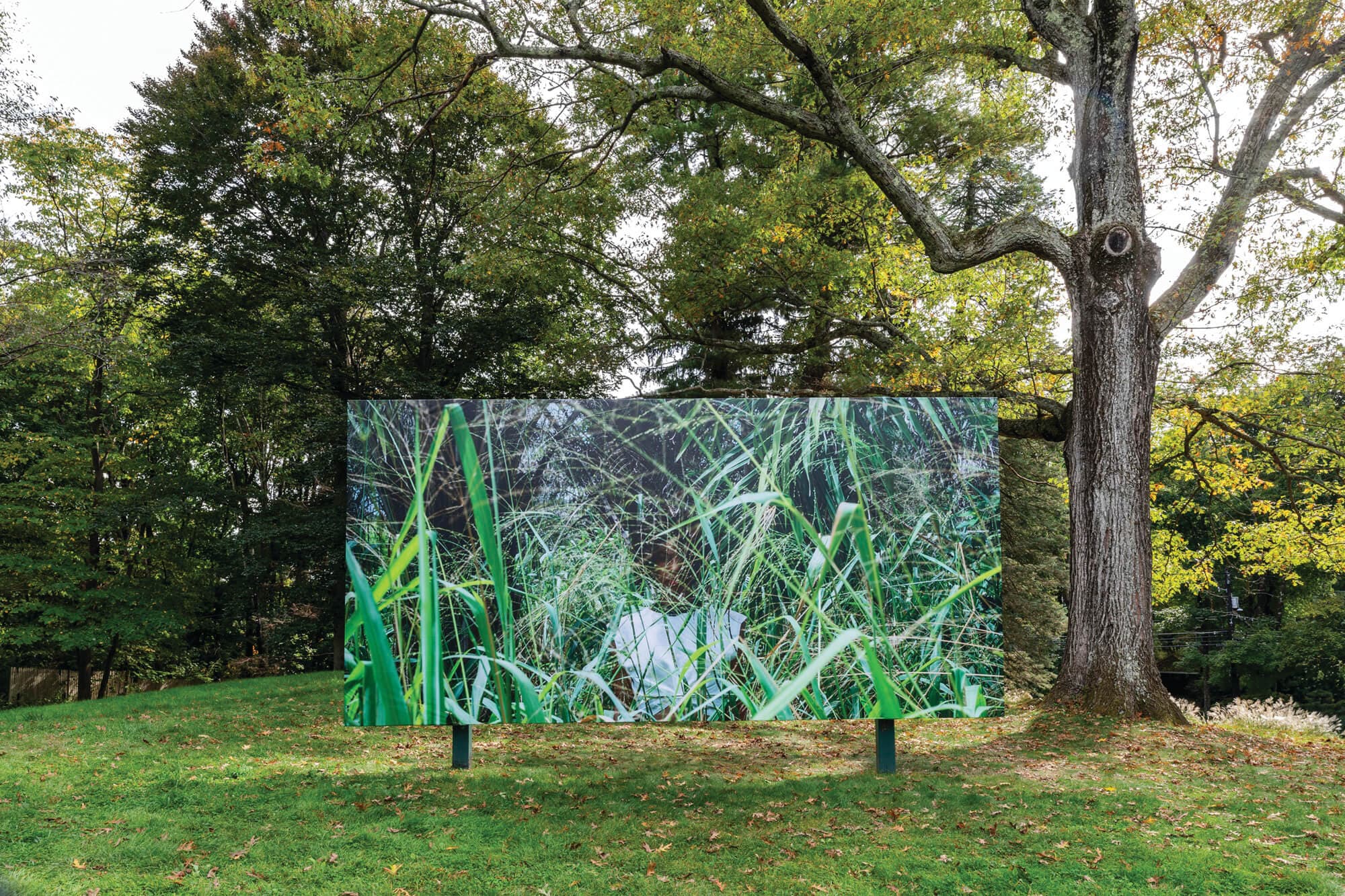
The exhibition’s most exceptional works come from German Ghanaian artist Zohra Opoku. Her six works are from the ongoing Self-Portraits series, where she photographs herself partially obscured by different plants. The images are simple but they convey much about place, from complicated feelings of invisibility and concealment to ideas of emerging, both in nature and in the locations we call home. Opoku’s largest work in the show is a low-standing billboard titled Sassa (2016), a reference to an Asante spirit that highlights the artist’s connection with nature as well as her cultural identity. Sassa is installed near one of the park’s most beloved and charismatic trees—a European weeping beech brought to the property from England by collector Julian de Cordova himself.
On its exterior, the beech looks like a giant leafy creature ready to lumber through the landscape. The tree’s understory is tall and roomy with large pendulous branches that stretch and lurch in all directions, including down into the earth. Despite signs not to, visitors have carved their names and messages of love or grief into the bark. These are very human things to do, breaking rules and leaving permanent marks on the living land around us. Just as human as moving ourselves great distances from the places we were born and carrying the plants we love with us when we do. The story of this non-native tree runs parallel to the story Opoku offers about identity, place, and the ways we merge into, stand out from, or make marks upon the natural world.
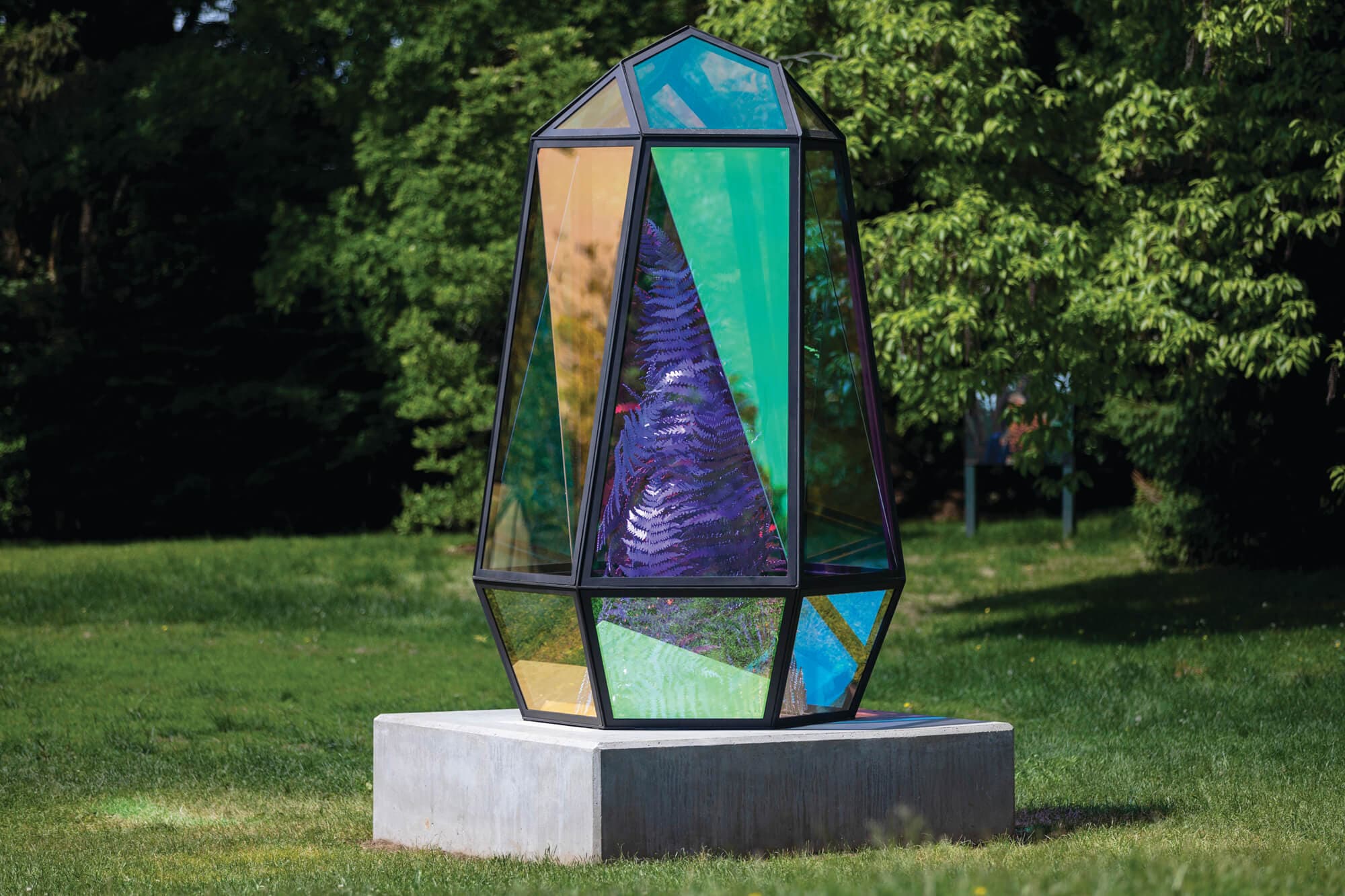
Commentary on complicated botanical histories continues in works by European-based Kapwani Kiwanga and NYC’s Joiri Minaya. Both artists use the history of glass containers to explore ideas around indigenous and imported plants, captivity, and the colonial history of botanical exports to places like Europe, New England, and elsewhere. Kiwanga’s On Growth (2023) is a spiraling fern sculpture set inside a giant prismatic Wardian case, an early form of terrariums used to transport specimens to Europe. Before the invention of the Wardian case, specimens died from the stressful conditions of nineteenth-century transport; their use enabled the rise of a global industry built on the extraction of the exotic. The sculpture is dazzling and beautiful, pointing to the ways we continue to gloss over and repackage complicated, ugly histories for easy consumption. For Tropticon II (2025), Minaya designed an approachable structure, the size of a backyard shed, to explore the limits of and damages caused by the greenhouse (namely the propagation of exoticized plants, extracted for consumption in faraway lands). The work is conceptually accessible and drives home just how pervasive and mundane colonial botanical histories continue to be.
In A Snail’s Pace (2018), by Hudson Valley–based Kathy Ruttenberg, the artist considers what the increasingly rapid pace of American culture does to the individual. A figure of a woman is seated inside the clear shell of a giant snail. The figure is protected but also isolated, visible but unreachable, hiding out in nature (in someone else’s home, in fact). The title is a commentary on the notion of slowing down; the phrase “slow and steady wins the race” comes to mind. Beneath the sculpture, a chipmunk has made its home; a mushroom grows alongside the burrow’s entrance.
Offering a counter to the previous works about damage and isolation is Boston-based Venetia Dale’s new work Within Time (2025). The community-sourced work is positioned near two snags, the ecological term for dead trees that humans often find unsightly but that serve a vital role as a food and shelter source for insects, fungi, and birds. The snag-adjacent location inspired Dale to ask museum staff, volunteers, and families to donate clippings of their favorite house plants. She cast them in pewter and assembled them into hanging shapes that suggest domestic hanging baskets but also the jumble of wood and leaf skeletons spiders and worms create to pupate, shed skins, or safely overwinter. Dale’s work is a shiny object, reflecting just how much of a group project our natural spaces have become.
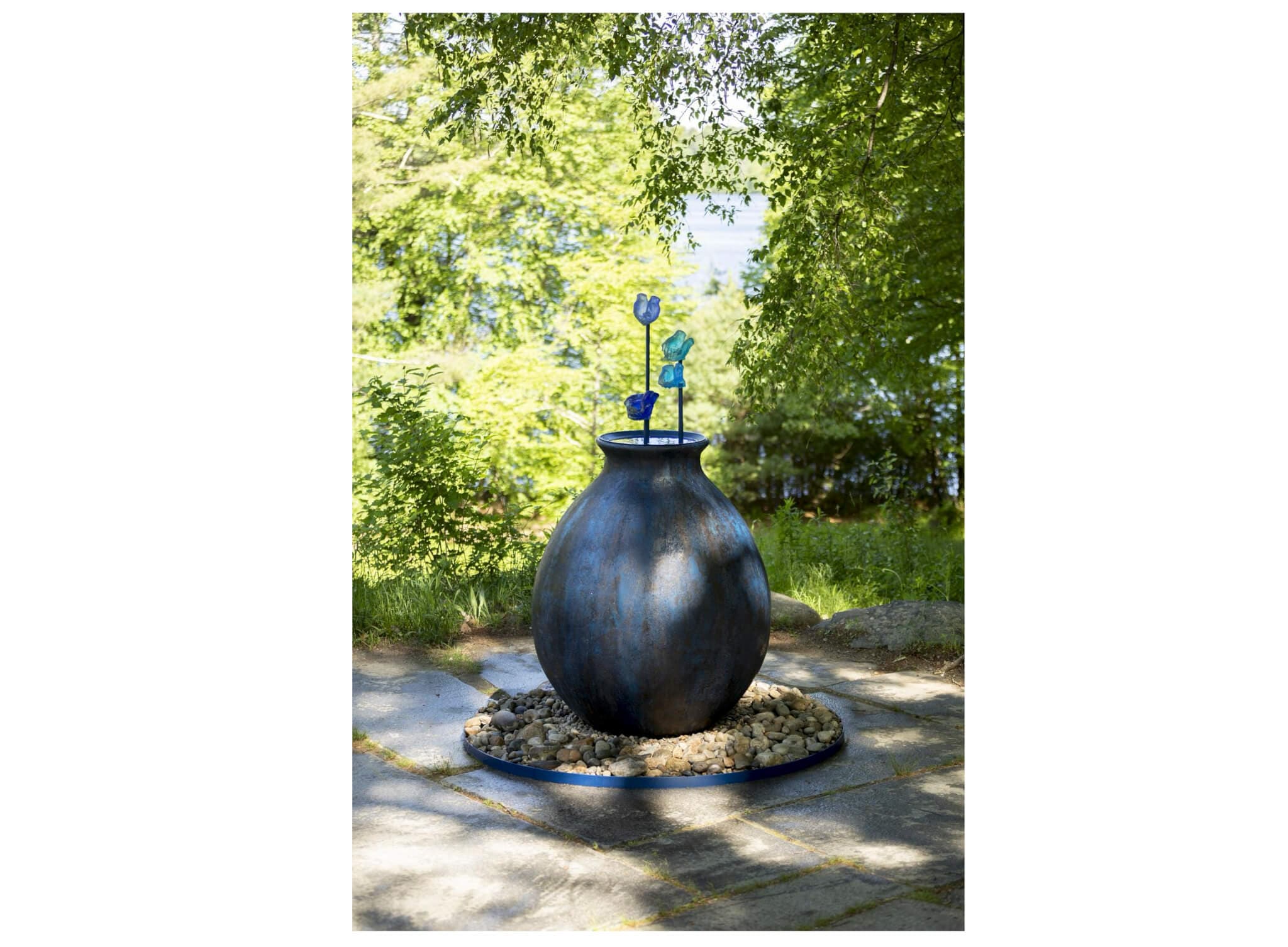
Even the most considered, poetic, and sublime artworks leave a trace. A footpath behind the museum building leads to Holding Water (2025), a work by Boston-based Evelyn Rydz. Installed with Flint’s Pond in the background, the piece is a human-scale sculpture with its own ecology and features the cupped hands of four local waterkeepers cast in shades of blue glass. They’re mounted in a cascading pattern atop an oversized cobalt blue vessel. The vessel is tall and solid with a shallow dip on the top that collects rainwater. While Holding Water results in the unintended death of bees in its shallow pool, it gives life to several spiders that have built mosquito‑filled webs under its lip. When outdoor artworks host our nonhuman kin, artists create a cycle of reciprocity. When rainwater flows over the work’s cascading hands, it provokes the question What about nature is actually ours to hold?
“Nature Sanctuary” is on view through October 4, 2026, at deCordova Sculpture Park and Museum, 51 Sandy Pond Road, Lincoln, MA.